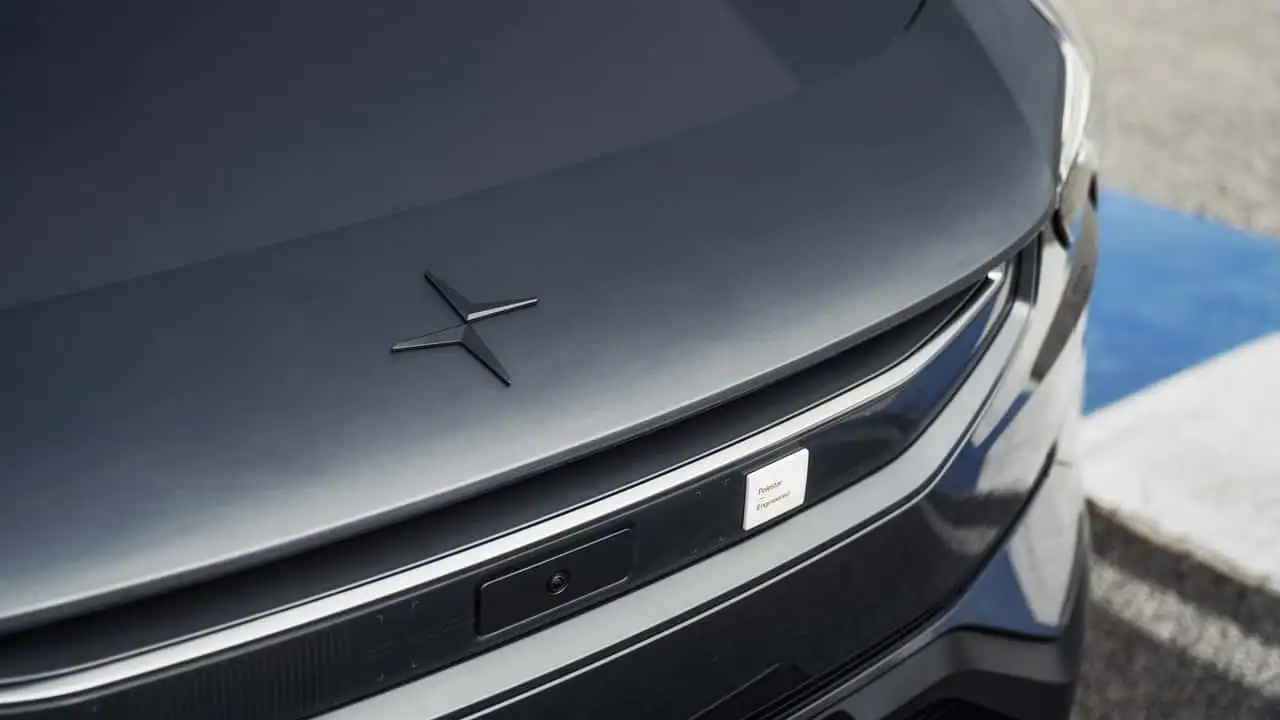
Polestar’s planned departure from the U.S. market has taken a new turn after a New Jersey dealership sued the electric-car manufacturer for at least $25 million, alleging that the company had been preparing to leave the American market long before a federal regulatory decision effectively ended its ability to sell new vehicles.
Prestige Imports, which operates Polestar dealerships in East Hanover and Short Hills, filed the lawsuit in Bergen County Superior Court on August 12. The dealer claims Polestar violated New Jersey’s Franchise Practices Act and used the federal government’s restrictions on Chinese-linked automotive technology as a way to exit the U.S. market while avoiding its obligations to dealers.
Those are allegations contained in the lawsuit, not established facts.
Polestar has not publicly accepted the dealer’s version of events.
The dispute nevertheless raises an important question for the automotive industry:
If a government regulation forces an automaker out of a market, can the automaker also walk away from its contractual obligations to the dealers it previously encouraged to invest in that market?
That is what this lawsuit could ultimately help determine.
Why Polestar is leaving the U.S.
Polestar’s U.S. problems are connected to new American restrictions targeting connected vehicles linked to China and Russia.
Polestar is a Swedish-origin electric vehicle brand, but it is controlled by China’s Geely group.
Under the U.S. Connected Vehicle Rule, Polestar was barred from selling vehicles using the relevant Chinese-linked technology in the American market beyond the 2026 model year.
That effectively means Polestar can sell its remaining 2026 inventory but cannot continue normal new-vehicle sales in the United States from the 2027 model year onward.
For a relatively young EV brand, that is an enormous disruption.
Polestar had built a network of 32 U.S. retailers, all of which had invested in facilities, staff and infrastructure to sell and service its vehicles.
Now those businesses are facing an uncertain future.
What Prestige Imports is alleging
Prestige Imports’ lawsuit goes much further than simply arguing that Polestar’s exit is unfair.
The dealer alleges that Polestar had been planning to leave the U.S. market for approximately two years.
According to the complaint, the company continued encouraging retailers to invest in its U.S. business even while allegedly preparing for an eventual departure.
The dealer also claims that Polestar effectively helped create the circumstances that allowed it to leave.
In other words, Prestige Imports is arguing that the federal ban was not simply an unexpected event that forced Polestar out.
It alleges that Polestar “maneuvered” the government into a ban and then used that ban as justification for ending its dealer relationships.
Again, this is the dealer’s allegation.
It has not been proven in court.
The Volvo comparison
One of the most important elements of the lawsuit involves another Geely-owned automaker: Volvo Cars.
Volvo and Polestar have the same broader Chinese ownership connection through Geely.
Yet Volvo was able to obtain an exemption allowing it to continue selling vehicles in the United States under the new regulatory framework.
Prestige Imports alleges that Polestar could have pursued a similar route but chose not to.
The dealership also claims Polestar declined to appeal the U.S. Commerce Department’s decision.
That difference is central to the dealer’s argument.
If Volvo could satisfy the government’s requirements, Prestige is effectively asking:
Why couldn’t Polestar do the same?
Polestar’s position and the government’s reasoning will be important as the case develops.
A senator has also questioned Polestar’s decision
The dealership’s allegations have attracted attention because they have also been echoed by Senator Bernie Moreno, a former auto dealer.
Moreno has publicly argued that Polestar could have pursued a path similar to Volvo and suggested that the company’s decision to accept the U.S. restriction was deliberate.
He has also argued that Polestar had financial reasons for wanting to leave the American market.
According to statements cited in reporting on the lawsuit, Moreno claimed Polestar was losing roughly $30,000 to $35,000 on each vehicle sold in the U.S.
That figure is particularly important because it provides a possible business explanation for why Polestar might have wanted to reduce its exposure to the American market.
However, the figure should be treated as Moreno’s claim, rather than an independently established number.
Why the dealer is asking for $25 million
The lawsuit isn’t simply about Polestar continuing to sell cars.
Prestige Imports says the automaker’s actions effectively terminated its franchise.
Under New Jersey franchise law, the dealer argues that it is entitled to compensation for the value of its franchise as well as continued parts and warranty support under certain circumstances.
That is why the lawsuit could become much more expensive for Polestar than simply compensating dealers for unsold vehicles.
The dealer is seeking at least $25 million.
It is also seeking a declaration that Polestar violated New Jersey’s franchise protections.
What is a “constructive termination”?
This legal concept is at the heart of the dispute.
A manufacturer doesn’t necessarily have to send a dealer a letter saying:
“Your franchise is terminated.”
A dealer can potentially argue that a manufacturer’s actions have made it impossible to continue operating normally, effectively ending the franchise without formally terminating it.
Prestige Imports says Polestar’s actions amounted to this kind of constructive termination.
The dealership reportedly received a “force majeure” letter from Polestar after the federal restrictions took effect.
Polestar’s position was that the regulatory situation was outside the company’s control.
Prestige Imports disagrees.
It argues that the situation cannot be treated as an unavoidable force-majeure event if Polestar itself contributed to creating the circumstances.
That is a legal question the courts will ultimately have to address.
Why the “force majeure” argument matters
Force majeure clauses are designed for situations where extraordinary circumstances prevent a party from fulfilling a contract.
Government action can potentially qualify.
For Polestar, the federal restrictions provide a seemingly straightforward argument:
The U.S. government prevented us from selling these vehicles, so we cannot continue the franchise in the same way.
But the dealer is challenging the assumption behind that argument.
Its position is essentially:
What if the manufacturer’s own decisions contributed to the government action?
That is what makes this case particularly interesting.
The answer could affect how courts view similar disputes in the future.
The dealer says Polestar kept encouraging investment
Another significant allegation involves dealer investment.
Prestige Imports claims Polestar continued encouraging American dealers to expand their businesses even while allegedly planning its eventual U.S. departure.
The lawsuit reportedly points to plans connected to the upcoming Polestar 7, including a multi-year Bergen County expansion that was allegedly approved as recently as February 2026.
If the allegations are eventually supported by evidence, this could become one of the most important parts of the case.
There is a major difference between:
“We were unexpectedly forced out of America.”
and
“We knew we were leaving but continued asking dealers to invest.”
The second scenario could create substantially greater legal and financial exposure.
But again, that is precisely what the lawsuit will need to establish.
Polestar has not accepted the dealer’s allegations
Polestar has declined to comment specifically on the lawsuit.
However, the company has said that its priority is continuing to support customers and providing the service they expect.
That is important because Polestar’s departure from new-vehicle sales does not mean existing Polestar vehicles suddenly become unsupported.
The company has indicated that it intends to continue servicing existing customers and supporting warranties.
Remaining 2026 inventory can also still be sold.
So the U.S. market isn’t disappearing overnight.
Instead, Polestar’s new-car sales business is being wound down.
What happens to existing Polestar owners?
For people who already own a Polestar, the situation is very different from that faced by dealers.
The company has said it will continue supporting existing vehicles.
That means current owners should still have access to:
- Warranty support
- Parts
- Service
- Software updates
- Existing customer support
The bigger concern is what happens several years down the road.
A shrinking vehicle population can eventually make parts and specialist servicing more difficult or expensive.
That doesn’t necessarily mean Polestar owners should panic.
But it does introduce a level of uncertainty that buyers of a more established brand may not face.
The dealership network has the most immediate problem
For the 32 U.S. Polestar retailers, the problem is more immediate.
These businesses were structured around selling a manufacturer’s vehicles.
If new Polestar inventory stops arriving, dealers have to find other ways to use their facilities and employees.
Some may transition to other brands.
Others may continue servicing existing Polestar vehicles.
Some could potentially close.
This is one reason the lawsuit matters beyond Prestige Imports.
There are 31 other U.S. Polestar retailers watching what happens.
A court decision could influence the financial position of the entire network.
This is bigger than one dealership
At first glance, the lawsuit looks like a dispute between one New Jersey dealer and one EV manufacturer.
But there is a much bigger issue underneath it.
The auto industry is becoming increasingly interconnected with geopolitics.
Automakers now have to consider:
- Where their vehicles are manufactured
- Where batteries are produced
- Who owns the company
- Where software is developed
- Where connected-vehicle technology comes from
- Which countries control critical components
Polestar sits directly in the middle of those issues.
It is Swedish in origin and branding, but has Chinese ownership ties through Geely.
That structure was manageable when the primary question was product development and global manufacturing.
It has become much more complicated as governments increasingly treat connected-car technology as a national-security issue.
EVs are becoming part of geopolitics
This is an important development for the electric-vehicle industry.
For years, EV discussions focused mainly on:
Range.
Battery capacity.
Charging speed.
Price.
Now another factor has become increasingly important:
Where does the technology come from?
Governments are becoming more concerned about the data collected by connected vehicles and the possibility that foreign-controlled technology could create security risks.
That is why the U.S. Connected Vehicle Rule has become so important.
It isn’t simply an automotive regulation.
It sits at the intersection of technology, trade, national security and transportation.
The Polestar case shows the risk of global ownership structures
Polestar’s situation demonstrates how complicated global automotive ownership can become.
A vehicle may be:
- Designed in Europe
- Manufactured in China
- Powered by batteries sourced internationally
- Equipped with software developed across several countries
- Sold through American dealers
- Connected to cloud infrastructure in multiple regions
That makes the traditional idea of a “Swedish car” or “American car” increasingly difficult to define.
For regulators, however, ownership and technology relationships can still matter enormously.
Could this affect other automakers?
Potentially.
The Polestar dispute is unusual because the brand’s ownership structure has put it directly in the path of U.S. connected-vehicle restrictions.
But the broader principle could affect other manufacturers if governments impose additional restrictions on foreign technology.
Automakers and dealers will increasingly need to consider geopolitical risk when signing long-term agreements.
That could affect:
- Franchise agreements
- Factory investments
- Charging infrastructure
- Software partnerships
- Battery sourcing
- Vehicle imports
The automotive industry’s globalisation has created enormous efficiencies.
But it has also created new vulnerabilities.
Polestar’s U.S. strategy was already under pressure
It’s also important not to assume that the government restrictions are the only reason Polestar is leaving.
The company has faced significant challenges in the U.S. market.
Polestar’s American sales operation has been relatively small compared with major established brands.
The company has also faced delays, tariffs, product-launch challenges and increasing competition in the premium EV segment.
The lawsuit itself claims Polestar had been planning its U.S. exit for years, but that allegation has yet to be established.
Even without the regulatory ban, Polestar’s American business would have faced difficult questions about scale and profitability.
The Polestar 7 makes the timing even more interesting
The dealer’s allegations regarding the Polestar 7 are particularly notable.
The company had been preparing a new generation of vehicles and had reportedly encouraged American dealers to prepare for future products.
If the allegations are accurate, that would mean some retailers were making long-term investments based on the expectation that Polestar would remain in America.
Then the market effectively disappeared.
That is exactly the type of situation franchise laws are designed to address.
Could Polestar have avoided the U.S. exit?
That is one of the biggest unanswered questions.
The dealer argues that Volvo’s exemption proves Polestar could have taken another route.
But obtaining a regulatory exemption isn’t necessarily straightforward.
Volvo has its own manufacturing footprint, investment commitments and regulatory arrangements in the United States.
Those factors may have helped its case.
Whether Polestar could have met the same requirements is something the court and regulators may have to examine.
Until more evidence emerges, it would be premature to say that Polestar definitely could have avoided the ban.
What happens next?
The lawsuit is now moving through the New Jersey court system.
Several issues will likely become important:
- Did Polestar violate New Jersey franchise law?
- Was the federal restriction genuinely outside Polestar’s control?
- Did Polestar have a pre-existing plan to leave the U.S.?
- Did the company encourage dealers to make investments despite knowing that risk?
- Could Polestar have pursued the type of exemption obtained by Volvo?
- What compensation, if any, should dealers receive?
Evidence presented during the case could provide a much clearer picture of what happened behind the scenes.
What this means for Polestar
The lawsuit comes at a difficult time.
Polestar now has to manage its departure from one of the world’s largest automotive markets while maintaining support for existing customers.
The company also needs to protect its brand reputation.
A perception that Polestar deliberately used government regulation as a way to escape its dealer obligations could damage relationships with retailers in other markets.
On the other hand, if the company can demonstrate that it genuinely had no practical alternative after the federal restrictions, its legal position could be considerably stronger.
What this means for dealers
The case could become an important precedent.
Automakers routinely enter into long-term relationships with dealerships.
Dealers invest millions in buildings, equipment, employees, training and marketing.
If a manufacturer later exits a market because of regulation, economic problems or strategic changes, someone has to absorb those costs.
The Polestar lawsuit is essentially asking:
Who should bear that risk?
The manufacturer?
The dealer?
Or both?
There is no simple answer.
GoGreenway’s take
The Polestar dealer lawsuit is much more than another story about an EV company struggling in America.
It is a glimpse into the complicated future of the global automotive industry.
Polestar’s U.S. exit is being driven by a combination of geopolitics, technology regulation, EV economics and business strategy.
The $25 million lawsuit adds another layer.
Prestige Imports alleges that Polestar had been preparing to leave the U.S. for years and used the federal connected-vehicle restrictions as a convenient mechanism to do so.
Polestar has not accepted those allegations.
Until a court examines the evidence, the claims should remain exactly that — claims.
But the case is worth watching because its outcome could establish an important principle for the automotive industry.
If governments increasingly restrict vehicles based on their technology or ownership, manufacturers will sometimes be forced to leave markets.
When that happens, the dealers, suppliers and customers left behind still have contracts, investments and businesses to protect.
The Polestar case could help determine how those competing interests are balanced.
And there is an even bigger lesson for the EV industry:
The future of electric cars will not be determined by batteries and motors alone.
Ownership, software, data, geopolitics and regulation are becoming just as important.
Polestar may be one of the first major examples of that new reality.
Sources