Europe’s electric-vehicle transition is becoming much more than a change in the cars people drive.
Across the European Economic Area and Switzerland, countries have committed almost €200 billion to building an electric-vehicle ecosystem that stretches from battery manufacturing and vehicle production to public charging infrastructure.
The scale of the investment shows just how seriously Europe is treating electric mobility — not only as a climate policy, but as an industrial strategy.
According to research from New AutoMotive, the commitments include about €109 billion for the battery supply chain, €60 billion for EV manufacturing and between €23 billion and €46 billion for public charging networks. More than one million public charging points have already been deployed.
But where exactly is all that money going, and what does Europe hope to achieve with it?
€109 billion is going into batteries
The largest portion of Europe’s EV investment is going toward the battery supply chain.
That makes sense because batteries are at the centre of the electric-vehicle industry.
Europe can build electric cars, but without a reliable supply of battery cells and the materials needed to produce them, automakers remain dependent on overseas suppliers.
The region is therefore trying to develop a broader battery ecosystem that includes:
- Battery-cell factories
- Battery materials
- Processing and refining
- Battery-pack production
- Recycling
- Research and development
- Supporting industrial infrastructure
This is also about reducing Europe’s dependence on China.
The International Energy Agency reported that China accounted for more than 80% of global battery production in 2025, including batteries used outside electric vehicles.
For European policymakers, that level of concentration represents both an economic and strategic risk.
If Europe wants a large domestic EV industry, it needs greater control over the battery supply chain behind it.
Europe is already producing more of its own batteries
The investment is beginning to translate into industrial capacity.
New AutoMotive says Europe now produces batteries for roughly one in three EVs sold domestically, while announced production capacity could cover future demand if projects are fully utilised.
That does not mean Europe has become independent from Asian battery suppliers.
The continent still depends heavily on imported raw materials, processed battery materials and components.
But the direction is clear.
Europe is attempting to move from being primarily an importer of battery technology toward becoming a major battery manufacturing centre in its own right.
Germany is Europe’s biggest EV investment hub
Germany accounts for almost one-quarter of the region’s EV investment, making it Europe’s largest national centre for electric-vehicle manufacturing and battery investment.
That is hardly surprising.
Germany has one of the world’s largest automotive industries, with companies such as Volkswagen, BMW and Mercedes-Benz employing hundreds of thousands of people directly and indirectly through their supply chains.
The country’s transition to electric vehicles therefore has consequences far beyond individual car companies.
Factories have to be retooled.
Workers need new skills.
Battery suppliers have to be established.
Charging infrastructure needs to expand.
And electricity networks must eventually support a much larger number of electric vehicles.
Germany is effectively trying to transform the industrial base that made it a global automotive powerhouse without losing its manufacturing advantage in the process.
€60 billion is going into EV manufacturing
Battery factories are only one part of the story.
Around €60 billion has been committed to EV manufacturing, covering vehicle factories and facilities being converted or expanded to produce electric vehicles.
That money is helping European manufacturers prepare for a market in which electric vehicles will represent a much larger share of new-car sales.
The investment also reflects a simple reality:
Building an EV is different from building a petrol or diesel car.
Electric vehicles have fewer mechanical components in the powertrain, but they require significant expertise in batteries, power electronics, software and electric motors.
Automakers therefore have to invest in new production systems while deciding what happens to factories that were designed around internal-combustion engines.
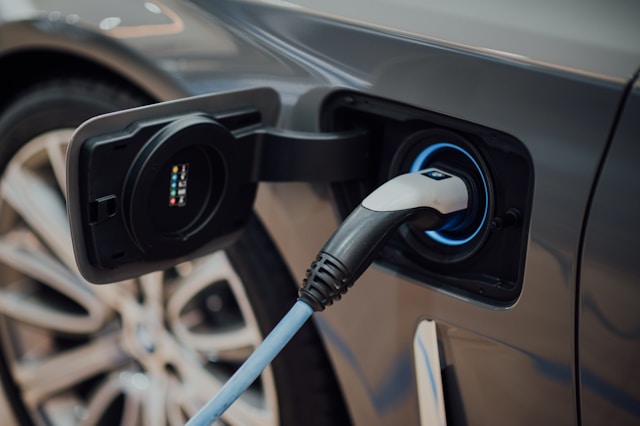
Charging infrastructure is another huge investment
Even a cheap and efficient EV will struggle to succeed if drivers cannot conveniently recharge it.
That is why Europe is also investing tens of billions of euros in public charging.
New AutoMotive estimates that €23 billion to €46 billion has been committed to public charging infrastructure across the region, with more than one million public charging points already deployed.
The range in the estimate reflects differences in how charging infrastructure investment is measured.
But regardless of the precise figure, the scale is enormous.
Europe isn’t just building electric cars.
It is also building the infrastructure needed to support them.
Why charging numbers alone don’t tell the whole story
One million charging points sounds impressive, but the number alone doesn’t tell us how convenient charging actually is.
A charging network needs to be:
- Well distributed geographically
- Reliable
- Affordable
- Easy to access
- Fast enough for different types of journeys
- Connected to an electricity network capable of supporting growing demand
A driver with a charger at home has a very different experience from someone who depends entirely on public charging.
That distinction will become increasingly important as EV ownership expands beyond early adopters.
Europe is also trying to create jobs
The EV transition is not just consuming money.
It is also creating new industrial activity and employment.
E-Mobility Europe says current EV investments already support more than 150,000 jobs, with another 300,000 potentially possible if all announced projects are completed.
New AutoMotive’s separate research into Europe’s battery supply chain also estimates that battery-related employment could grow substantially by 2030, with its current data showing more than 60,000 jobs already supported by the sector.
That creates a second reason for governments to support EV manufacturing.
The transition is not only about reducing emissions.
It is also about where future manufacturing jobs and industrial investment will be located.
Europe is trying to compete with China
China’s dominance of battery manufacturing is one of the biggest reasons Europe is investing so heavily.
China has developed an enormous EV ecosystem covering batteries, materials, components and vehicle manufacturing.
European manufacturers now face competition from Chinese automakers that have become increasingly capable in electric vehicles.
That puts European policymakers in a difficult position.
They want cheaper EVs for consumers, but they also want European companies to remain competitive.
They want open markets, but they also want to avoid becoming excessively dependent on foreign supply chains.
And they want the transition to happen quickly without destroying jobs in Europe’s traditional automotive industry.
The nearly €200 billion investment programme is partly an attempt to solve those problems simultaneously.
The battery supply chain is bigger than the battery factory
One of the most important things to understand about Europe’s investment is that a battery factory is only one part of the supply chain.
Before a battery cell can be manufactured, materials have to be extracted and processed.
After a battery reaches the end of its useful automotive life, its valuable materials can potentially be recovered through recycling.
That means Europe needs capabilities across the entire chain.
New AutoMotive’s European Battery Supply Chain Tracker highlights projects ranging from mining and refining to gigafactories and recycling.
This could eventually create a more circular battery economy in Europe.
Instead of continually importing raw materials and producing batteries that eventually become waste, more of the valuable materials could theoretically remain within the regional economy.
That is one of the areas where EV manufacturing intersects directly with the circular economy.
Investment does not guarantee success
Almost €200 billion committed to EVs sounds like an overwhelming vote of confidence.
But investment alone does not guarantee that Europe’s strategy will succeed.
Factories need customers.
Battery plants need to operate at sufficiently high utilisation rates.
Electricity needs to be competitively priced.
Companies need access to skilled workers.
And governments need to provide predictable policies so businesses can make investments that may take decades to pay back.
Analysts quoted by Reuters said Europe will still need supportive policies, protection against unfair competition and more stable energy costs if its automotive industry is to remain globally competitive.
That last point is particularly important.
European manufacturing can be technically advanced but still struggle to compete if energy and production costs remain significantly higher than those of competing regions.
Europe’s EV strategy is facing a policy test
There is another complication.
Europe’s EV investment is happening while policymakers are reconsidering how quickly the transition should happen.
The European Commission has already moved toward greater flexibility around the bloc’s previous approach to phasing out new combustion-engine vehicles, following pressure from the automotive industry. Reuters described the change as a significant retreat from earlier policy ambitions.
That creates an unusual situation.
Companies are investing billions in batteries and EV factories while governments are simultaneously giving automakers more flexibility over how quickly they have to transition.
The result could be either a more realistic transition or a period of uncertainty that makes companies hesitate over future investment.
For manufacturers, policy stability matters almost as much as the policy itself.
What happens if EV demand grows more slowly?
This is one of the biggest risks facing Europe’s investment programme.
Imagine a battery factory is built with the expectation that EV sales will grow rapidly.
If demand subsequently grows much more slowly, the factory could operate below capacity.
That makes each battery more expensive to produce and can put the entire investment under pressure.
This is already one of the challenges facing parts of Europe’s emerging battery industry.
New AutoMotive’s research on individual European battery hubs points to the importance of maintaining strong EV demand alongside manufacturing investment.
In simple terms:
Europe cannot build the supply chain without also developing the market that will consume what it produces.
What does all this mean for car buyers?
The ultimate goal is to make electric vehicles more practical and competitive.
More battery manufacturing could eventually improve supply security.
More factories could increase production volumes.
More charging stations could make long-distance travel easier.
And greater competition between manufacturers could put downward pressure on prices.
But consumers should not expect a direct relationship between government investment and cheaper cars.
A €200 billion industrial investment does not mean €200 billion will simply be returned to consumers.
Much of the money is being invested by private companies and governments for different reasons, and the economic benefits will depend on whether the projects become commercially successful.
What Europe can teach Africa
Europe’s EV strategy also offers an important lesson for Africa.
Countries such as Nigeria often focus on the vehicles themselves when discussing electric mobility.
But the European experience shows that an EV ecosystem is much larger than the car.
A functioning electric-vehicle market needs:
- Reliable electricity
- Charging infrastructure
- Technicians and specialised skills
- Spare parts
- Battery servicing
- Financing
- Standards and regulation
- Battery recycling
- Local or regional supply chains
Nigeria does not need to copy Europe’s €200 billion investment programme.
Its market, electricity system and automotive industry are very different.
But the principle is relevant.
If Africa wants electric mobility to grow sustainably, investment needs to extend beyond importing finished vehicles.
The continent will need to develop the supporting businesses and infrastructure around them.
The circular-economy opportunity
There is another area where Africa could eventually benefit.
As more EVs enter global markets, the number of batteries reaching the end of their first automotive life will eventually increase.
That creates opportunities in:
- Battery collection
- Diagnostics
- Second-life applications
- Recycling
- Material recovery
- Battery refurbishment
For African countries, developing these capabilities early could help prevent the region from becoming simply an end market for used electric vehicles and batteries.
Instead, parts of the continent could potentially become important hubs for battery reuse and recycling.
That is a longer-term opportunity, but it is one worth considering as EV imports increase.
GoGreenway’s take
Europe’s nearly €200 billion commitment to electric mobility shows that the EV transition is now an industrial competition as much as an environmental one.
The largest share is going into the battery supply chain, followed by vehicle manufacturing and charging infrastructure.
The strategy has a clear objective: build enough domestic capability to keep Europe competitive while reducing its dependence on external supply chains, particularly those dominated by China.
But Europe’s challenge is bigger than building factories.
It needs enough consumers to buy the vehicles, enough affordable electricity to run the factories, enough workers to staff them and enough policy certainty to keep investors committed.
That is why the next phase of Europe’s EV transition will be less about announcing huge investments and more about turning those investments into profitable, functioning industrial ecosystems.
For Africa, there is an important lesson here.
The electric-vehicle transition is not simply a race to import more EVs.
It is a race to build the infrastructure, skills, businesses and circular supply chains that make electric mobility sustainable.