Subaru is no longer treating electric vehicles as a distant future project.
The Japanese automaker is expanding its EV lineup, investing in battery-electric technology and preparing its factories for electric-car production.
But there is a problem.
Selling the cars is proving much harder than building them.
Subaru has been spending aggressively to promote and incentivize its electric vehicles in the United States, yet its EV sales have remained relatively small compared with the company’s traditional petrol-powered SUVs.
Recent reporting found that Subaru’s marketing and incentive spending on EVs has risen sharply. In one recent quarter, the company reportedly spent around $9,650 for every Solterra sold, while its total U.S. marketing expenses increased by about 40%.
That creates an uncomfortable question for Subaru:
How much money can an automaker spend trying to create EV demand before it has to rethink its strategy?
Subaru has more EVs than before
For years, Subaru had a very limited presence in the electric-car market.
The Solterra, developed through Subaru’s partnership with Toyota, was its first major global battery-electric vehicle.
Now the company has expanded its U.S. EV lineup.
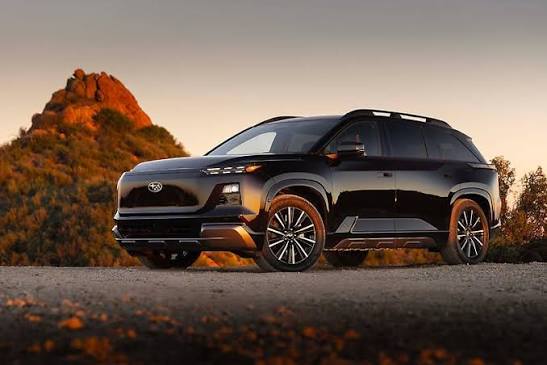
Alongside the Solterra, Subaru has introduced the Trailseeker and Uncharted, giving the brand three electric models instead of one.
On paper, that is significant progress.
A broader lineup gives customers more choice.
Subaru now has EVs aimed at different types of buyers, rather than expecting one model to serve the entire market.
But adding more EVs does not automatically create more EV customers.
The sales numbers show the challenge
Subaru’s EV sales remain small compared with its mainstream models.
According to recent U.S. sales data reported by Carscoops, Subaru sold 5,275 Solterras during the first seven months of 2026, down 34.6% from the same period a year earlier.
July was particularly difficult for the Solterra, with sales falling to just 138 units, compared with 1,562 in July of the previous year.
The Trailseeker and Uncharted are newer models, so year-over-year comparisons are not yet available for them.
However, their sales volumes were still relatively modest.
Through July, Subaru had sold:
- 3,513 Trailseekers
- 2,850 Uncharted models
- 5,275 Solterras
Combined, that represented a relatively small part of Subaru’s overall U.S. business.
For comparison, Subaru’s traditional Forester and Crosstrek remain far more important to the company.
Subaru’s biggest problem may not be the cars themselves
This is what makes the story interesting.
Subaru’s EV problem isn’t necessarily that it has no products to sell.
The company now has multiple electric models.
The bigger challenge is convincing its existing customer base to move away from petrol-powered vehicles.
Subaru has built its modern identity around practical vehicles with:
- Standard or available all-wheel drive
- Outdoor-focused branding
- Strong safety credentials
- Practical cargo space
- A loyal customer base
For many Subaru buyers, a Forester or Outback already meets their needs.
That makes switching to an EV a bigger decision.
The buyer isn’t simply asking:
“Is this a good Subaru?”
They are also asking:
“Am I ready to own an electric car?”
That’s where the EV transition becomes difficult
Buying an EV involves more than choosing a vehicle.
For many customers, it raises questions about:
- Home charging
- Public charging
- Long-distance travel
- Battery life
- Electricity costs
- Purchase price
- Resale value
A customer who already owns a reliable petrol-powered Subaru may not see an urgent reason to change.
And Subaru appears to be discovering that even substantial incentives do not automatically remove those concerns.
Subaru is spending heavily to create demand
The numbers surrounding Subaru’s EV incentives are particularly striking.
Carscoops reported that Subaru spent around $9,650 in marketing and incentives per Solterra sold during a recent quarter.
That was roughly three times the amount reportedly spent per Outback sold.
Incentives can be an effective way to move vehicles.
Lower prices can attract customers.
Lease deals can reduce monthly payments.
Special financing can make an expensive vehicle more accessible.
But there is a downside.
If an automaker needs to spend thousands of dollars per vehicle simply to generate sales, that can become difficult to sustain.
Incentives don’t always solve a demand problem
This is one of the most important lessons from Subaru’s situation.
A discount can convince someone who already wants a product to buy sooner.
But it may be less effective at convincing someone who doesn’t want the product in the first place.
That distinction matters.
If a potential buyer is interested in the Solterra but thinks it is too expensive, an incentive could make a big difference.
But if the buyer is worried about charging access or simply prefers a petrol-powered Forester, a discount may not completely change their mind.
The end of EV incentives has made things harder
The broader U.S. EV market has also changed.
Recent reporting noted that the loss of federal EV tax credits removed an important source of financial support for electric-car buyers.
That puts more pressure on automakers.
If government incentives disappear, manufacturers may have to offer bigger discounts themselves to keep monthly payments competitive.
In other words, some of the cost that was previously supported through government policy can shift back toward the automaker.
That could explain why EV marketing and incentive costs have become such an important issue.
Subaru is not giving up on EVs
Despite the sales challenges, Subaru has not abandoned electric vehicles.
The company has continued investing in EV technology and expanding its lineup.
Subaru has also been preparing production facilities for battery-electric vehicles.
However, the company has recently adjusted its approach to account for changing market conditions.
In its latest financial presentation, Subaru said it had postponed the timing of some in-house BEV launches and shifted development resources toward expanding its internal-combustion and hybrid lineup, while maintaining that EVs remain important for its long-term carbon-neutrality strategy.
That is a significant strategic adjustment.
Subaru is changing the speed of its EV transition
The important distinction is that Subaru isn’t necessarily saying:
“EVs don’t work.”
Instead, the company appears to be saying:
“The market is developing differently from what we expected.”
That has forced Subaru to become more flexible.
The company is still developing technologies such as batteries and e-axles.
It is still introducing new EVs.
But it is also putting greater emphasis on hybrids and conventional vehicles while demand develops.
That approach may prove more realistic than betting the company’s entire future on one technology.
Toyota is an important part of Subaru’s EV strategy
Subaru’s relationship with Toyota is particularly important here.
The Solterra is closely connected to Toyota’s electric-vehicle technology.
Subaru has also used its partnership with Toyota to bring additional EVs to market while controlling some development costs.
According to Subaru’s financial presentation, the company sees its alliance with Toyota as a way to expand EV customer options while managing investment.
That matters because developing a new EV platform is extremely expensive.
A partnership allows companies to share some of those costs.
But shared technology doesn’t guarantee shared success
There is another side to this.
If several brands use related technology, customers may compare them directly.
A buyer might ask:
Why should I buy the Subaru version rather than the Toyota version?
For Subaru, the answer has to be more than a badge.
The EV needs to offer something that fits the brand’s identity.
That could include all-weather performance, practical design, safety and outdoor capability.
If customers don’t see a strong difference, it becomes harder to justify buying one model over another.
Subaru’s traditional models remain extremely important
The sales comparison highlights the challenge.
In July, Subaru sold:
- 15,873 Foresters
- 15,789 Crosstreks
- 13,917 Outbacks
during the same month that its three EVs combined for 1,574 sales.
That gap is enormous.
Subaru’s core business is still built around conventional SUVs and crossovers.
Those vehicles are familiar to customers.
They are widely available.
And buyers already understand how to use them.
No charging strategy is required.
EVs are asking customers to change their habits
This is a problem facing the entire industry.
An EV isn’t simply a new type of engine.
For many people, it changes their routine.
A petrol-car owner can refuel almost anywhere.
An EV owner ideally needs convenient access to charging.
For drivers with home charging, this can actually be easier than visiting a fuel station.
But for people living in apartments or areas with limited charging infrastructure, the experience can be more complicated.
The quality of the charging network can therefore have a direct effect on vehicle sales.
This matters even more for Subaru’s customers
Subaru markets heavily to drivers who enjoy:
- Camping
- Hiking
- Skiing
- Outdoor travel
- Long-distance road trips
Those customers may travel through areas where charging infrastructure is less reliable.
That doesn’t mean EVs are unsuitable for outdoor lifestyles.
But it means Subaru has to convince customers that an electric vehicle can support the same freedom its petrol-powered vehicles have traditionally represented.
That is a particularly important challenge for the brand.
The technology itself is improving
Subaru’s future EVs should benefit from improvements in:
- Battery energy density
- Charging speed
- Range
- Thermal management
- Manufacturing efficiency
Those improvements could eventually make EV ownership easier.
A vehicle with more range and faster charging addresses some of the biggest concerns buyers have today.
But technology alone isn’t enough.
The vehicles still need to be priced competitively.
And the charging infrastructure has to support them.
Subaru is also facing a difficult investment problem
Automakers are being asked to invest in several technologies at once.
They need money for:
EVs.
Battery factories.
Software.
Hybrid systems.
Conventional engines.
Safety technology.
New manufacturing systems.
The problem is that these investments happen before an automaker knows exactly which technologies customers will adopt fastest.
If EV sales grow more slowly than expected, billions of dollars invested in EV programmes can take longer to generate a return.
That puts pressure on profits.
Subaru reported that operating profit fell significantly, while also recording substantial BEV-related expenses connected to changes in its EV outlook and the reassessment of related development assets.
This is why automakers are becoming more cautious
Subaru is not alone.
Across the industry, several manufacturers have adjusted EV investment plans as demand growth has varied by region and market.
The original expectation was that EV adoption would rise in a relatively predictable straight line.
Reality has been more complicated.
Some markets have adopted EVs quickly.
Others remain heavily dependent on petrol, diesel and hybrid vehicles.
That means automakers increasingly need flexible strategies.
A hybrid strategy may become more important
For Subaru, one response is to expand hybrid options.
Subaru’s latest strategy explicitly says it is shifting some development resources toward expanding its ICE and hybrid lineup while continuing essential EV technology development.
Hybrids could provide Subaru with a useful middle ground.
They can reduce fuel consumption without requiring customers to depend entirely on public charging.
That could appeal to drivers who want better efficiency but are not ready for a fully electric vehicle.
Could Subaru have moved too early?
It’s tempting to say Subaru invested too much too soon.
But the answer isn’t that simple.
Automakers can’t wait until EV demand is already enormous before developing EV technology.
By then, they could be years behind competitors.
The industry requires long development cycles.
Battery factories, vehicle platforms and manufacturing plants take years to plan and build.
So Subaru has to invest before it knows exactly how the market will develop.
The real challenge is deciding how much to invest and how quickly.
The EV market could still change again
Today’s sales problems don’t necessarily mean Subaru’s EV strategy will fail permanently.
The market could change if:
- Battery prices continue falling
- More charging stations are built
- Charging becomes faster
- More affordable EVs arrive
- Electricity becomes a more attractive alternative to petrol
- Government policies change
A company that slows its investment too much could also find itself unprepared if EV demand suddenly accelerates.
That’s why Subaru’s strategy of continuing essential EV development while maintaining hybrids and conventional vehicles could be a sensible compromise.
What this means for the EV industry
Subaru’s situation illustrates one of the biggest problems facing automakers today.
Building EVs and selling EVs are two different challenges.
An automaker can have the technology.
It can have the factories.
It can have the vehicles.
But customers still have to decide that an EV fits their lives.
And that decision depends on much more than the car itself.
Price matters.
Charging matters.
Range matters.
Infrastructure matters.
Government policy matters.
And consumer confidence matters.
What it means for Nigeria and Africa
Subaru’s situation also provides an interesting lesson for markets where EV adoption is still developing.
In Nigeria and many other African countries, the challenge could be even greater.
Public charging infrastructure is still emerging.
Electricity supply can be inconsistent in some areas.
Vehicle prices are highly important.
And many buyers rely on imported used vehicles rather than buying new cars.
That means simply introducing more EV models may not be enough.
Manufacturers and governments will need to address the wider ecosystem around the vehicles.
That includes:
- Reliable charging
- Affordable vehicles
- Skilled technicians
- Parts availability
- Battery support
- Consumer education
- Financing options
GoGreenway verdict
Subaru’s EV problem is a reminder that the transition to electric cars won’t be won simply by spending more money.
The company has expanded from one EV to three in the U.S., invested in EV development and reportedly spent heavily on marketing and incentives.
Yet sales have remained relatively modest, particularly for the Solterra.
The result is forcing Subaru to become more flexible.
The company is still investing in essential EV technologies and sees battery-electric vehicles as part of its long-term strategy.
But it has also postponed some in-house EV launches and shifted resources toward hybrids and conventional vehicles as it adjusts to slower-than-expected EV demand.
That may ultimately be the biggest lesson.
The future of the car industry is still electric — but the journey may not happen at the speed automakers originally expected.
For Subaru, the challenge now is to keep investing enough to remain competitive in EVs while avoiding spending so aggressively that weak sales turn electric cars into a financial burden.
And until more buyers are convinced to make the switch, selling the EV may remain harder than building it.