BMW is getting closer to a major milestone in its electric-vehicle strategy in the United States.
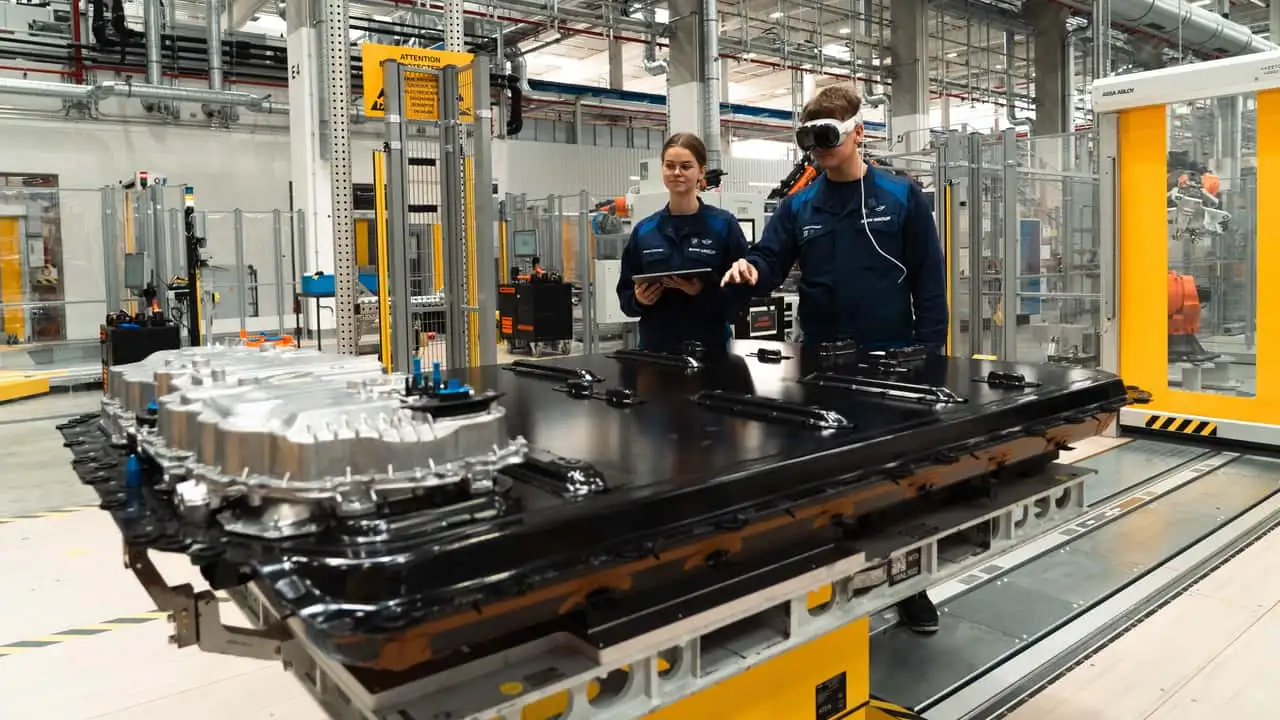
The automaker has given the first look inside its new Woodruff battery manufacturing facility in South Carolina, where high-voltage batteries for the upcoming fully electric BMW iX5 are being assembled ahead of series production.
BMW says series production of the batteries is scheduled to begin in December 2026.
The facility is part of BMW’s much larger effort to localise electric-vehicle production in the United States.
And the timing is important.
The electric iX5 will be one of BMW’s most important new EVs, while the company is simultaneously expanding its next-generation battery technology across several production locations around the world.
A battery factory built for the iX5
The Woodruff facility is located near BMW’s existing manufacturing operation in Spartanburg, South Carolina.
That proximity is deliberate.
BMW is following what it calls a “local for local” production strategy, meaning batteries are assembled as close as possible to the vehicle plants that will use them.
For the electric iX5, that means the battery production operation in Woodruff is closely connected to BMW’s Spartanburg vehicle factory.
BMW says the Woodruff facility will assemble the high-voltage batteries required for the new fully electric iX5.
The electric iX5 is a major BMW model
The iX5 is particularly important because the X5 is one of BMW’s most recognisable and successful SUVs.
The next-generation X5 will be offered with multiple powertrain choices, including the fully electric iX5.
BMW says the new X5 is being developed with five different drive-system technologies, while the first fully electric version will use the company’s sixth-generation eDrive technology.
That makes the iX5 an important bridge between BMW’s traditional combustion-powered vehicles and its expanding electric lineup.
The battery is the heart of the electric X5
For a conventional X5, the engine is the central component.
For the iX5, the battery takes on that role.
The high-voltage battery stores the energy required to power the electric motors.
Its size, chemistry, energy density, thermal management and charging capabilities all influence the vehicle’s:
- Driving range
- Performance
- Charging speed
- Efficiency
- Weight
- Cost
That makes producing the battery a strategically important part of BMW’s EV programme.
BMW is using its sixth-generation battery technology
The iX5 will use BMW’s sixth-generation high-voltage battery technology, known as Gen6.
BMW says the Gen6 battery cells used in the iX5 contain a high proportion of secondary materials in their cobalt, lithium and nickel content.
The company also says renewable energy is used in the production of the anode and cathode materials and during cell manufacturing.
According to BMW, CO₂e emissions per watt-hour for the Gen6 cell have been reduced by approximately 28% compared with the Gen5 cell used in the BMW iX.
That’s an important improvement because battery manufacturing can represent a significant portion of an EV’s environmental footprint.
BMW isn’t manufacturing every battery cell itself
There’s an important distinction here.
BMW’s Woodruff operation is primarily a high-voltage battery assembly plant.
The battery cells themselves are supplied by external cell manufacturers according to BMW’s specifications.
BMW then assembles those cells into complete high-voltage battery systems.
The process involves a number of highly automated stages.
Cells are grouped into clusters, connected to cooling systems and integrated with the battery’s electrical and structural components.
BMW says the production system uses extensive automated inspection and quality-control technology.
Artificial intelligence is part of the manufacturing process
BMW is also using artificial intelligence and data analytics to monitor battery production.
That matters because battery manufacturing requires extremely high levels of consistency.
A defect in an individual cell or connection can potentially affect the performance or safety of an entire battery pack.
BMW says its Gen6 battery production follows a zero-defect approach, with intelligent production processes monitoring manufacturing quality.
Every battery goes through extensive testing
BMW’s battery production process doesn’t simply assemble the components and send them to the vehicle factory.
The finished battery undergoes testing.
BMW says its high-voltage batteries receive 100% end-of-line inspection to verify quality, safety and functionality.
That is particularly important for a component carrying large amounts of electrical energy.
Why build the battery factory in South Carolina?
The answer comes down to integration.
BMW already has a huge vehicle manufacturing operation in Spartanburg.
The company has been building BMW SUVs there for decades.
The facility produces models including the X3, X5, X6 and X7.
Adding battery production nearby allows BMW to create a much more integrated EV manufacturing operation.
Instead of importing complete batteries from another continent, BMW can assemble them relatively close to where the vehicles are produced.
BMW’s “local for local” strategy
Woodruff is not an isolated project.
BMW is establishing a network of Gen6 battery assembly facilities around the world.
The company says these facilities are being positioned close to vehicle production sites under its “local for local” principle.
Other locations include:
- Debrecen, Hungary
- Irlbach-Straßkirchen, Germany
- Shenyang, China
- San Luis Potosí, Mexico
Debrecen was the first of the new facilities to begin series production of Gen6 high-voltage batteries, starting in 2025.
Why localisation matters
Producing batteries close to vehicle assembly plants can provide several advantages.
Shorter supply chains
Batteries are heavy and expensive components.
Transporting them across continents can add cost and complexity.
Local production reduces some of that logistical burden.
Greater supply security
A local battery facility can help protect vehicle production from disruptions elsewhere in the global supply chain.
Faster manufacturing integration
Battery and vehicle production teams can work more closely together.
Potential environmental benefits
Shorter transportation routes can reduce some logistics-related emissions, although the overall environmental impact still depends heavily on how materials and energy are sourced.
BMW’s American EV strategy is expanding
The Woodruff battery plant comes as BMW prepares to introduce more electric models in the United States.
The company isn’t abandoning its existing combustion-powered vehicles.
Instead, it is moving toward a much more flexible manufacturing strategy.
BMW wants factories and production systems capable of supporting multiple propulsion technologies.
That gives the company flexibility as consumer demand changes.
The X5 is an important test for this strategy
The X5 is particularly significant because it is already an established BMW model.
BMW doesn’t have to convince customers that the X5 name exists.
It is essentially taking a familiar vehicle concept and offering an electric version alongside other powertrain choices.
That could make the transition to electric driving easier for customers who already like the X5.
The iX5 will have BMW’s largest battery
BMW says the fully electric iX5 will use the largest high-voltage battery ever fitted to a BMW model.
That should give the vehicle a substantial amount of stored energy.
But a larger battery also creates challenges.
More battery capacity means:
- More raw materials
- More weight
- More manufacturing energy
- Higher production cost
The challenge for BMW is therefore to increase range without simply making batteries enormous.
Battery efficiency matters
The sixth-generation technology is intended to improve energy density and efficiency.
If an automaker can store more usable energy without increasing battery weight proportionally, it can improve vehicle efficiency.
That can translate into greater range without requiring an enormous increase in battery size.
BMW is also trying to reduce battery-production emissions
The environmental side of the battery factory is worth watching.
BMW says the Gen6 battery cells have a lower carbon footprint than its previous-generation cells.
The company also says renewable energy is used during the production of the anode and cathode materials and cell manufacturing.
The Woodruff plant itself is designed to operate without fossil fuels during normal operations.
BMW says industrial trucks at the facility are powered by hydrogen.
That gives the plant an interesting sustainability angle.
But battery production is still resource-intensive
It’s important not to oversell this.
A battery factory isn’t automatically “green” simply because it produces batteries for electric vehicles.
Battery production requires:
- Lithium
- Nickel
- Cobalt, depending on chemistry
- Graphite
- Aluminium
- Copper
- Steel
- Energy
- Water and industrial processes
Mining and processing those materials have environmental impacts.
That’s why BMW’s efforts to use secondary materials and lower manufacturing emissions are significant.
More recycled materials could become increasingly important
BMW says the Gen6 cells use a high proportion of secondary materials in their cobalt, lithium and nickel content.
That means materials recovered from previous production or recycling processes can be incorporated into new battery manufacturing.
This is important for the long-term sustainability of EVs.
The industry cannot rely indefinitely on increasing extraction of virgin materials as EV production grows.
Battery recycling will become more important
As more electric cars reach the end of their useful lives, large numbers of batteries will eventually enter recycling streams.
Recovering valuable materials from those batteries can help reduce the need for new mining.
It can also make the battery supply chain more circular.
BMW’s emphasis on secondary materials fits into that broader trend.
Automation is another major part of the factory
Battery manufacturing requires precision.
BMW says the Woodruff facility uses advanced automation, artificial intelligence and virtual reality to support production.
Virtual reality can be used to simulate production processes before workers and machinery operate on the actual line.
That can help identify problems early.
AI and data analytics can also help detect unusual patterns during production.
The goal is zero-defect production
Battery safety is one area where manufacturers have very little room for error.
A conventional mechanical component can sometimes tolerate minor manufacturing variation.
High-voltage battery systems require much tighter control.
BMW’s zero-defect strategy therefore uses continuous inspection throughout production.
The company says weld seams are monitored in real time and finished batteries undergo complete end-of-line testing.
The battery plant is part of a much bigger BMW investment
The Woodruff operation shouldn’t be viewed as a standalone factory.
It is part of BMW’s broader transformation of its U.S. manufacturing footprint.
The company is investing heavily in the Spartanburg region as it prepares for the next generation of vehicles.
That includes electric vehicles, batteries and supporting production infrastructure.
BMW is trying to avoid putting all its bets on one powertrain
The automotive market remains unpredictable.
Some customers are moving rapidly toward EVs.
Others remain interested in hybrids.
Others still prefer petrol-powered vehicles.
BMW’s approach is therefore relatively flexible.
The company is developing EVs while continuing to offer multiple powertrain options.
The new X5 is a good example.
Five powertrain choices for the new X5
BMW says the new X5 will be available with five different drive technologies.
The fully electric iX5 will sit alongside other powertrain choices.
That gives customers more options while allowing BMW to adapt production to market demand.
Why this matters for BMW
The automotive industry is undergoing one of the biggest technological transitions in its history.
Engines are being replaced or supplemented by electric motors.
Mechanical systems are becoming increasingly software-controlled.
Battery technology is becoming a core competitive advantage.
And manufacturing plants are becoming more automated.
BMW’s Woodruff battery facility sits directly at the centre of all four trends.
It also strengthens BMW’s U.S. supply chain
BMW has historically depended on a global network of suppliers.
The Woodruff battery facility gives it another important piece of domestic manufacturing capacity.
That can become increasingly valuable as governments place greater emphasis on local production and supply-chain resilience.
The iX5 could be a major test of BMW’s EV strategy
The question isn’t simply whether BMW can build an electric X5.
It can.
The bigger question is whether customers will choose it in significant numbers.
The X5 has a large and loyal customer base.
If a substantial portion of those customers move to the electric version, the iX5 could become one of BMW’s most important EVs.
If customers continue favouring combustion and hybrid versions, BMW’s multi-powertrain strategy gives it another route.
BMW has already reached a major EV milestone
The company’s electric transition is no longer theoretical.
In May 2026, BMW announced that it had produced its two-millionth fully electric vehicle globally.
That demonstrates the scale of BMW’s existing EV manufacturing operation.
The iX5 and its new battery technology represent the next stage.
The bigger change is the battery architecture
The iX5 isn’t simply another electric BMW.
It introduces BMW’s next-generation battery technology and forms part of the company’s broader Neue Klasse technology strategy.
The Neue Klasse represents BMW’s new generation of electric vehicles and associated technology.
The first Neue Klasse production model, the iX3, is already being produced in Debrecen, Hungary.
BMW says its Debrecen plant produced its 50,000th iX3 in July 2026, highlighting how quickly the new platform is being scaled.
The same battery philosophy is spreading globally
The Woodruff plant is one part of a global battery-production network.
BMW is building the same basic Gen6 battery assembly capability across multiple regions.
That creates a standardised approach while keeping production relatively close to vehicle plants.
It’s a strategy designed for a global EV market.
What does this mean for the electric iX5?
For the iX5, the Woodruff facility means its battery will be assembled close to the vehicle’s production base.
That could help BMW integrate battery production more closely with vehicle assembly.
It also means the iX5 becomes one of the first major BMW models to benefit from this new generation of battery technology in the United States.
The environmental question is still bigger than the factory
BMW’s cleaner manufacturing claims are encouraging.
But the overall environmental performance of the iX5 will depend on the entire lifecycle of the vehicle.
That includes:
- Mining raw materials
- Producing battery cells
- Manufacturing the vehicle
- Transporting components
- Generating charging electricity
- Driving the vehicle
- Recycling the battery
A factory can reduce its own footprint, but it cannot eliminate the environmental impacts of the entire supply chain.
That is why the “local for local” strategy matters
If battery manufacturing, vehicle production and eventually recycling can become increasingly localised, manufacturers could potentially improve supply-chain transparency and reduce some unnecessary transportation.
It also makes it easier to build regional circular-economy systems around batteries.
For a company like BMW, that could become an important competitive advantage.
GoGreenway’s verdict
BMW’s Woodruff battery facility represents much more than another factory opening.
It is an important piece of the company’s transition toward a new generation of electric vehicles.
The facility is now assembling high-voltage batteries ahead of series production in December 2026, with the batteries destined for the fully electric BMW iX5.
The iX5 will use BMW’s sixth-generation battery technology, while BMW says the Gen6 cells offer approximately 28% lower CO₂e emissions per watt-hour than the previous Gen5 cells.
Perhaps more importantly, Woodruff demonstrates BMW’s move toward a “local for local” EV manufacturing strategy.
The company is building battery facilities close to its vehicle plants in the United States, Europe, China and Mexico rather than relying entirely on a centralised global battery supply chain.
For BMW, the strategy could mean greater control over battery supply.
For South Carolina, it means another major piece of the state’s growing EV manufacturing ecosystem.
And for the iX5, it means the electric X5 is arriving with an entirely new manufacturing and battery-production strategy behind it.
BMW’s electric future isn’t just being built on the road. It’s being built inside factories like Woodruff.
Sources
- BMW Group — First glimpse into production at Plant Woodruff: the primary source for the December 2026 production start, Gen6 batteries, lower carbon footprint and “local for local” strategy.
- BMW Group — New BMW X5 enters final test phase: primary source for the electric iX5, fifth-generation X5 and five powertrain options.
- BMW Group — Gen6 battery production: detailed explanation of the battery assembly process and quality-control system.
- BMW Group — Debrecen: useful context on BMW’s wider Neue Klasse production strategy and the global battery network.