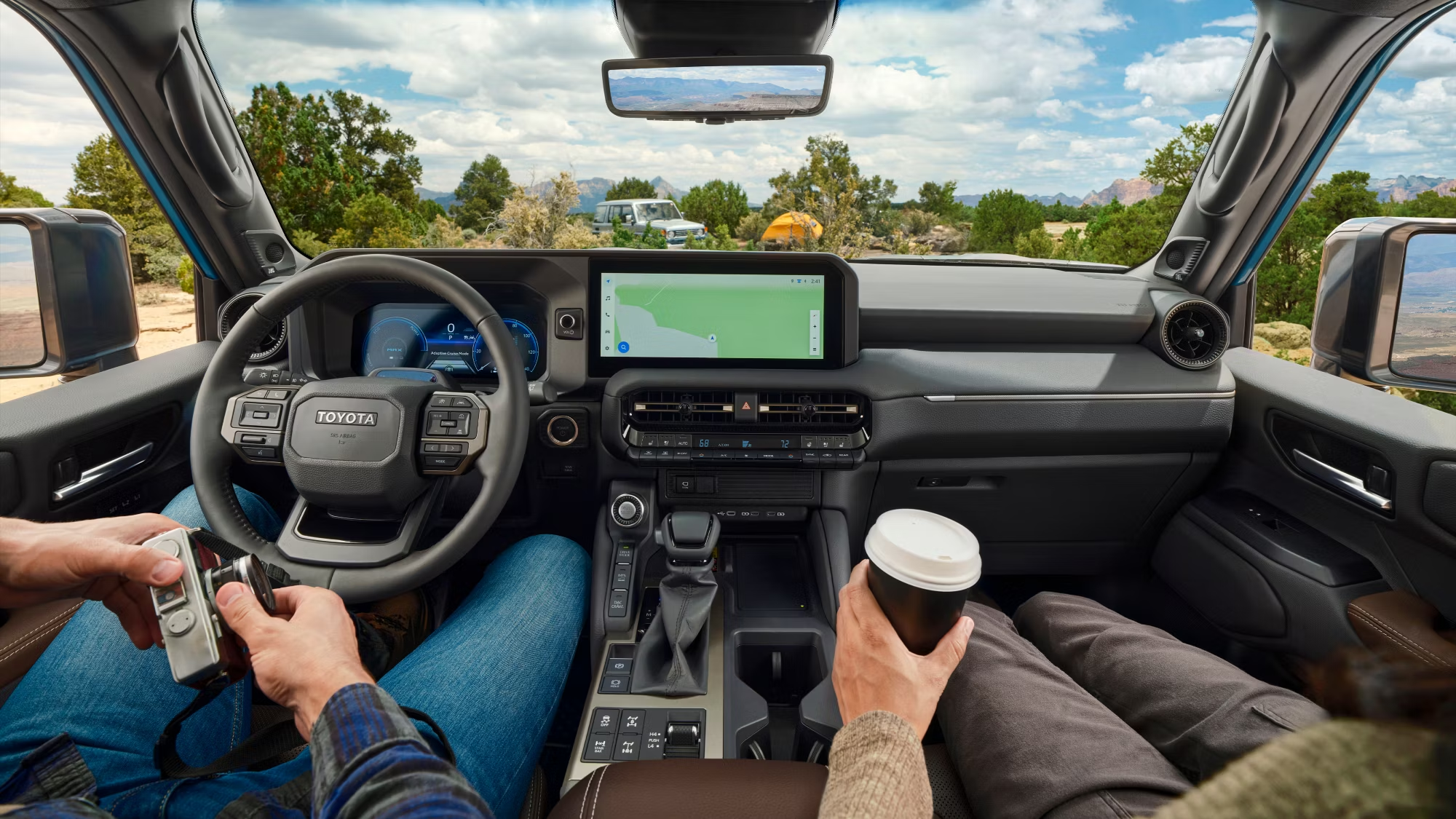
Buying your first car is exciting. It gives you more freedom and makes everyday travel easier.
But owning a car also comes with responsibilities that go beyond filling the fuel tank and washing it regularly.
A vehicle needs routine maintenance to remain safe, reliable and affordable to operate. Small problems that are identified early can often be fixed before they turn into expensive repairs.
For first-time car owners, the most important thing isn’t becoming a mechanic. It’s learning what to monitor, when to service the vehicle and when to ask a professional for help.
Here’s a practical guide to keeping your car in good condition.
1. Read Your Owner’s Manual
This is one of the simplest pieces of advice that new car owners often overlook.
Your owner’s manual contains information specific to your vehicle, including:
- Recommended engine oil
- Tyre pressure
- Maintenance intervals
- Recommended fluids
- Warning-light meanings
- Battery information
- Service requirements
- Fuel specifications
- Recommended replacement parts
Don’t rely entirely on advice from friends, mechanics or online videos.
A maintenance schedule that is correct for one vehicle may not be correct for another.
Your manufacturer’s recommendations should be your starting point.
2. Learn Your Car’s Basic Warning Lights
You don’t need to understand every component under the bonnet, but you should know what the major dashboard warning lights mean.
Some warnings indicate relatively minor issues, while others can signal a problem that requires immediate attention.
Pay particular attention to warnings relating to:
- Engine
- Oil pressure
- Temperature
- Brakes
- Battery/charging system
- Tyre pressure
- Airbags
If a serious warning appears, don’t simply turn the light off and continue driving.
Check your owner’s manual and seek professional assistance when necessary.
3. Check Your Engine Oil
For petrol and diesel vehicles, engine oil is one of the most important fluids.
It lubricates internal engine components and helps reduce friction and heat.
Check your oil level according to the instructions in your owner’s manual.
If your vehicle has a dipstick, make sure you follow the manufacturer’s procedure for checking the level.
Don’t simply add oil whenever the level drops.
If your engine is repeatedly losing oil, there may be a leak or another mechanical problem that needs investigation.
Also make sure you use the correct oil specification for your vehicle.
4. Look After Your Tyres
Your tyres are directly responsible for maintaining contact with the road, so their condition has a major effect on safety.
Check your tyres regularly for:
- Incorrect pressure
- Uneven tread wear
- Cracks
- Cuts
- Bulges
- Embedded objects
- Excessively worn tread
Check tyre pressure when the tyres are cold and use the pressure recommended by the vehicle manufacturer.
You can usually find this information on a sticker around the driver’s door area or in the owner’s manual.
Don’t use the maximum pressure printed on the tyre sidewall as your normal pressure unless the manufacturer specifies it.
5. Don’t Ignore Uneven Tyre Wear
If one part of a tyre is wearing significantly faster than another, don’t simply replace the tyre and move on.
Uneven wear can sometimes indicate:
- Poor wheel alignment
- Incorrect tyre pressure
- Suspension problems
- Worn steering components
Replacing the tyre without addressing the underlying problem could result in another tyre wearing out prematurely.
6. Check Your Brakes
Brakes should never be treated as a maintenance item you can postpone indefinitely.
Pay attention to changes such as:
- Squealing
- Grinding
- Vibrations
- A soft brake pedal
- The car pulling to one side
- Longer stopping distances
Brake pads and other components naturally wear over time.
How quickly they wear depends on factors such as your driving style, traffic conditions and the type of vehicle.
If braking performance changes, have the system inspected.
7. Check the Cooling System
An overheating engine can turn a relatively small problem into a major repair.
The cooling system includes components such as:
- Coolant
- Radiator
- Hoses
- Thermostat
- Water pump
- Cooling fans
Check the coolant level according to your vehicle manufacturer’s instructions.
If you regularly have to add coolant, don’t assume the vehicle simply “uses” coolant.
A leak or another cooling-system problem may need to be diagnosed.
Never open a pressurised cooling system while the engine is hot.
Hot coolant can cause serious burns.
8. Replace Worn Wiper Blades
Windscreen wipers may seem insignificant, but they become extremely important during heavy rain.
Replace them if they:
- Leave streaks
- Skip across the windscreen
- Make excessive noise
- Leave sections of glass uncleared
Good visibility is essential for safe driving, especially during heavy rainfall.
Keep the windscreen washer reservoir filled with an appropriate washer fluid as well.
9. Check Your Lights
Walk around your car occasionally and make sure the major lights are working.
Check:
- Headlights
- Brake lights
- Turn signals
- Hazard lights
- Reverse lights
- Fog lights, where fitted
- Number-plate lights
A failed light can make it harder for you to see and can also make your vehicle less visible to other road users.
10. Take Your Battery Seriously
A weak battery can leave you stranded even when the rest of the vehicle is in excellent condition.
Signs of a battery that may be becoming weak include:
- Slow engine cranking
- Difficulty starting
- Dim lights
- Electrical problems
- Repeated need for jump-starts
Battery life varies depending on the vehicle, climate and usage.
If your battery is getting old or the car is starting more slowly than usual, have it tested.
11. Pay Attention to Strange Sounds
Your vehicle can sometimes tell you that something is wrong before a dashboard warning appears.
Don’t ignore new or unusual:
- Grinding
- Knocking
- Clicking
- Humming
- Squealing
- Whining
The timing of the sound can provide useful clues.
For example, a noise that appears only when braking may have a very different cause from one that appears when accelerating or turning.
If an unusual sound persists, have the car inspected.
12. Watch for Fluid Leaks
Occasionally look underneath your vehicle after it has been parked.
A new puddle or stain can be a warning sign.
Possible leaks include:
- Engine oil
- Coolant
- Brake fluid
- Transmission fluid
- Power-steering fluid
Water dripping underneath a vehicle after using the air conditioner can be normal condensation, but other fluids should be investigated.
If you’re unsure what you’re seeing, show it to a qualified mechanic.
13. Follow the Service Schedule
Regular servicing is one of the easiest ways to keep your vehicle reliable.
Depending on the vehicle, scheduled maintenance may include:
- Engine oil and filter replacement
- Air-filter replacement
- Brake inspection
- Coolant inspection
- Spark-plug replacement
- Transmission servicing
- Belt inspection
- Suspension inspection
- Tyre rotation
- Cabin-filter replacement
Don’t assume every vehicle needs servicing at the same mileage.
Some manufacturers specify maintenance based on time, mileage or whichever comes first.
Always check your vehicle’s recommended schedule.
14. Understand Your Transmission
Transmission maintenance varies significantly between vehicles.
Manual transmissions, conventional automatics, CVTs and dual-clutch transmissions can all have different service requirements.
Don’t assume that every automatic transmission needs the same type of fluid or service interval.
If you’re unsure, check the owner’s manual or ask a qualified technician who is familiar with your vehicle.
15. Don’t Forget the Air Filter
Your engine needs a clean supply of air to operate properly.
A dirty air filter can restrict airflow and may affect engine performance and fuel efficiency.
How often the filter needs replacing depends on your vehicle and driving environment.
If you regularly drive on dusty roads, the filter may require more frequent inspection.
16. Take Care of Your Air Conditioning
For drivers in hot climates, air conditioning isn’t simply a luxury.
It’s an important part of everyday driving.
If your air conditioner isn’t cooling properly, don’t automatically assume it only needs more refrigerant.
Poor cooling can result from several problems, including:
- Dirty filters
- Refrigerant leaks
- Electrical faults
- Compressor problems
- Condenser issues
Have the system properly diagnosed instead of repeatedly adding refrigerant without identifying the underlying problem.
17. Be Careful on Rough Roads
Road conditions can have a significant effect on a vehicle.
Frequent driving over potholes, rough surfaces and unpaved roads can accelerate wear on:
- Suspension components
- Steering components
- Wheels
- Tyres
- Wheel alignment
If your steering suddenly feels different after hitting a large pothole, have the vehicle inspected.
Don’t assume that a vehicle is fine simply because it still drives.
Car Maintenance Tips for Nigerian Drivers
For drivers in Nigeria, certain conditions deserve particular attention.
Hot weather, dust, traffic congestion, potholes and frequent use of air conditioning can all influence vehicle wear.
Dust
Dusty roads can cause air filters to become dirty more quickly.
Heat
High temperatures place additional demands on cooling systems and batteries.
Traffic
Long periods of stop-and-go traffic can increase the workload on the engine, cooling system, transmission and brakes.
Poor roads
Potholes and rough roads can affect tyres, wheels, suspension and alignment.
Air conditioning
Because of the warm climate, many Nigerian drivers rely heavily on their A/C system. Keep the system properly maintained rather than waiting until it stops working.
This doesn’t mean you should automatically service everything more frequently than the manufacturer recommends.
Instead, understand your driving conditions and follow the appropriate severe-use maintenance recommendations when they apply.
18. Keep a Maintenance Record
One of the best habits a first-time car owner can develop is keeping records.
Record:
Date | Mileage | Work completed | Parts replaced | Cost | Next service
You can use a notebook, spreadsheet or phone app.
A maintenance history helps you:
- Remember when work was completed
- Plan upcoming expenses
- Diagnose recurring problems
- Track repair costs
- Demonstrate the vehicle’s history when selling it
A well-documented maintenance history can make a used car more attractive to future buyers.
19. Build a Relationship With a Good Mechanic
You don’t necessarily need to use the same mechanic for every job, but finding a trustworthy technician can make car ownership much easier.
A good mechanic should be willing to explain:
- What has gone wrong
- Why the repair is necessary
- How urgent it is
- What parts are required
- What could happen if the problem is ignored
For expensive repairs, don’t be afraid to get a second opinion.
20. Don’t Ignore Small Problems
One of the most expensive mistakes a car owner can make is assuming:
“The car is still driving, so it must be fine.”
A vehicle can continue operating while a problem is getting worse.
A small coolant leak can become overheating.
A worn brake component can lead to more expensive damage.
A slow tyre leak can eventually leave you stranded.
A weak battery can fail without much warning.
The earlier you identify a problem, the more options you usually have.
What First-Time Owners Should Keep in Their Car
A basic emergency kit can also make ownership easier.
Consider keeping:
- Spare tyre and jack
- Tyre-pressure gauge
- Jumper cables or an appropriate jump starter
- Torch
- Basic first-aid kit
- Reflective warning triangle
- Phone charger
- Emergency contact information
The exact equipment you need depends on your vehicle and where you drive.
What About Electric Vehicles?
If your first car is an EV, the maintenance routine will be different from that of a petrol or diesel vehicle.
Electric cars generally have fewer moving drivetrain components and don’t require conventional engine-oil changes.
However, EV owners still need to maintain:
- Tyres
- Brakes
- Suspension
- Steering
- Cabin filters
- Cooling systems
- 12-volt batteries
- High-voltage systems
Battery and high-voltage repairs should be handled by appropriately trained technicians.
For used EVs, battery health and recall history are also important things to investigate before purchasing.
A Simple First-Time Owner Maintenance Checklist
| Item | What to do |
|---|---|
| Engine oil | Check level and follow service schedule |
| Tyres | Check pressure and inspect for damage |
| Brakes | Watch for noise or changes in performance |
| Coolant | Check according to manufacturer instructions |
| Battery | Watch for slow starting |
| Lights | Check regularly |
| Wipers | Replace when visibility deteriorates |
| Air filter | Inspect according to service schedule |
| Air conditioning | Service when performance changes |
| Warning lights | Investigate promptly |
| Fluids | Check levels and look for leaks |
| Service history | Keep records of all work |
Final Thoughts
Owning your first car doesn’t mean you need to become an expert mechanic.
It means developing a few simple habits.
Read the owner’s manual. Follow the service schedule. Check your tyres. Pay attention to warning lights. Listen for unusual sounds. Keep your fluids at the correct levels and deal with small problems before they become major ones.
Most importantly, don’t wait for your car to break down before thinking about maintenance.
Good car care is preventive, not reactive.
The money you spend on routine maintenance today can help protect you from much larger repair bills tomorrow.
And for first-time car owners, that’s one of the most valuable lessons you can learn.